Somebody in your life probably told you Suboxone isn’t “real” recovery. Maybe it was a well-meaning uncle who did it “the hard way” back in the 90s, or a stranger in a meeting who swears medication is just a crutch dressed up in a prescription bottle. Frankly, most of what gets repeated about Suboxone in living rooms and Facebook comment sections is either outdated, half-true, or lifted from someone’s one bad experience and stretched into gospel.
Suboxone is a combination medication built from buprenorphine and naloxone, and it’s one of the primary tools used in medication-assisted treatment for opioid use disorder. It doesn’t produce the euphoric rush associated with heroin or oxycodone when taken as prescribed, and it isn’t handed out like candy at some sketchy strip-mall clinic, whatever the rumor mill suggests.
This piece separates the Suboxone myths that keep circulating from the Suboxone facts that clinicians, researchers, and federal health agencies stand behind. I’m not your doctor, and nothing here replaces a conversation with one. But I’ve spent enough time around addiction medicine coverage to know where the misinformation tends to hide.
Key Takeaways
- Suboxone is an FDA-approved medication for treating opioid use disorder, not a shortcut or a substitute high.
- Recovery doesn’t have a single approved shape, and plenty of people in stable, functional recovery take medication daily.
- And no medication, including this one, is risk-free, which is exactly why treatment decisions belong in a conversation with a qualified clinician instead of an online forum.
Is Suboxone Really Just Replacing One Addiction With Another?
Question: Is Suboxone Really Just Replacing One Addiction With Another?
Answer: No, and the confusion here comes from mixing up physical dependence with addiction, which are not the same thing. Buprenorphine, the active opioid component in Suboxone, is a partial opioid agonist, meaning it activates opioid receptors just enough to ease withdrawal symptoms and cravings without producing the intense high tied to full opioid agonists like heroin or fentanyl.
Someone can develop a physical dependence on a prescribed medication, the same way a person with epilepsy depends on anticonvulsants, without meeting the clinical definition of addiction, which involves compulsive use despite harm.
Myth: Suboxone Is Just Another High
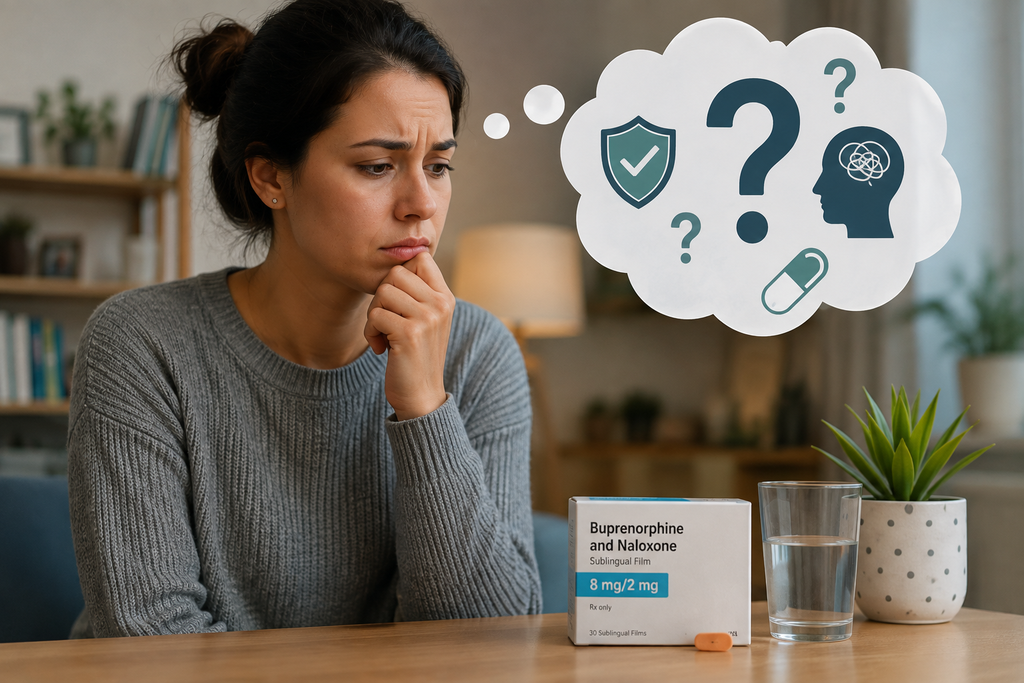
Here’s where the pharmacology actually matters. Suboxone works on the same opiate receptor system that heroin, oxycodone, and other opioids target, but the naloxone component and the partial-agonist nature of buprenorphine change the experience entirely. Rather than flooding the receptor and triggering a euphoric spike, buprenorphine occupies it steadily, easing opioid withdrawal and quieting cravings so a person can function, hold a job, and actually show up for the recovery work therapy and counseling require.
There’s a real difference between getting treatment and getting high, even though both involve a substance acting on opioid receptors. Someone using heroin is chasing intoxication, tolerance always climbing, and the dose always needing to go up. Someone on stable suboxone therapy typically plateaus at a maintenance dose and stays there, sometimes for years, without needing more to feel “normal.” Physical dependence can still happen, sure, but dependence on a therapeutic dose managed by a physician looks nothing like the chaotic, escalating pattern that defines active drug addiction.
| Common Claim | What the Evidence Actually Shows |
|---|---|
| “It’s just another high.” | Buprenorphine is FDA-approved to treat opioid use disorder, not to produce intoxication at therapeutic doses |
| “You’re not sober.” | Recovery can legitimately include prescribed medication as part of a broader treatment plan |
| “It’s completely safe.” | No medication is risk-free; oversight and honest reporting of other substances matter |
| “You can quit whenever.” | Stopping should be a tapered, individualized decision made with a prescribing clinician |
Myth: You’re Not Really Sober on Suboxone
Recovery was never a single, universally agreed-upon finish line. For some people it means total abstinence from every substance, including medication. For others, it means reduced illicit drug use, fewer overdoses, stable housing, a functioning relationship with their kids, and consistent engagement with treatment. Insisting there’s only one legitimate version of sobriety ignores decades of clinical outcomes data and, honestly, ignores the lived reality of a lot of people who are doing better than they’ve ever done.
Medication-assisted treatment isn’t a fringe idea propped up by pharmaceutical marketing. It’s the standard of care recommended by the Substance Abuse and Mental Health Services Administration, which lays out buprenorphine’s role in reducing physical dependency and supporting long-term stability in its clinical guidance on buprenorphine treatment options.
Medication is one component of a comprehensive treatment plan, sitting alongside therapy, recovery coaching, and often peer support, not a replacement for the rest of it. If someone tells you medication-assisted treatment isn’t “real” recovery, they’re arguing against the position held by essentially every major public health body in the country.
Myth: Suboxone Is Easy to Overdose On
Suboxone side effects truth: This one deserves a straight answer instead of vague reassurance. Suboxone carries real risk, but it’s not the risk people usually imagine. Because buprenorphine is a partial agonist, its effect on respiratory depression has a ceiling, meaning the danger of an isolated overdose is genuinely lower than with a full agonist like methadone or oxycodone.
FDA’s own prescribing information does note fatality risk, particularly in opioid-naive individuals or in cases involving improper use, alongside common adverse events like oral numbness, nausea, and constipation, details laid out in the FDA’s official Suboxone prescribing label.
Where things get genuinely dangerous is combination. Mixing Suboxone with alcohol, benzodiazepines, or other central nervous system depressants stacks respiratory suppression in a way the ceiling effect can’t fully protect against, a risk documented clearly in the drug’s sublingual film safety. Telling your prescriber about every medication, supplement, and substance you’re using isn’t optional paperwork, it’s the single biggest factor separating safe suboxone use from a medical emergency. Safety guidance here has to be individualized, because tolerance, other prescriptions, liver function, and mental health conditions like anxiety or depression all shift the risk picture.
Myth: You Can Quit Anytime With No Help
Physical dependence is part of how opioid medications work, full stop, and Suboxone is no exception. Stopping abruptly after weeks or months of stable dosing can trigger a drawn-out, uncomfortable withdrawal syndrome, sometimes worse than people expect given how gradually buprenorphine tends to leave the system compared to shorter-acting opiates. There’s no universal timeline for how long someone should stay on suboxone treatment, and anyone promising a fixed number of months is guessing, not practicing medicine.
What actually helps when someone’s considering stopping:
- Bring the specific reason to the prescribing clinician instead of a support group thread, whether it’s side effects, life changes, or just wanting to be done.
- Ask what a supervised taper would realistically look like for your dose and history, rather than following a schedule pulled from a stranger’s post online.
- Treat “I want to stop” and “I’m ready to stop safely” as two different conversations that deserve different answers.
Precipitated withdrawal, the sudden and severe reaction that can happen when opioid medications are handled incorrectly, is exactly why self-directed changes are risky. A tapering plan built around an individual’s history with opioid tolerance, other prescriptions, and mental health needs works. Internet advice pulled from a forum thread does not.
The Facts: What the Evidence Actually Shows
Strip away the anecdotes and the recovery-community slang, and the research consensus is fairly consistent. Buprenorphine is FDA-approved for opioid use disorder. It measurably eases withdrawal symptoms and cravings, which is precisely why the Centers for Disease Control and Prevention has pushed for wider access to it, noting in its analysis of buprenorphine dispensing patterns across rural and urban settings that the medication remains underused relative to how well it performs. Treatment should be individualized, meaning what works for one patient’s opioid addiction may not fit another’s, and the medication comes with genuine side effects and risks that require ongoing clinical oversight rather than a “set it and forget it” prescription.
Effective doesn’t mean risk-free, and it’s worth separating hard evidence from the noise around it. Personal anecdotes are real experiences, but they’re not clinical data. Recovery-community terminology carries emotional weight but isn’t a medical standard. Social media claims spread fast precisely because outrage and fear travel further than nuance. The CDC’s own clinical guidance is blunt about the alternative too, warning that standalone detox without medication carries an elevated risk of relapse and fatal overdose compared to medication-supported treatment.
Where These Myths Actually Come From
Nobody invents suboxone myths out of thin air. Somebody had a rough induction and a bout of nausea, told their story, and it got generalized into “Suboxone makes everyone sick.” Somebody else confused physical dependence with active addiction because the two get talked about interchangeably in casual conversation, even though clinicians draw a sharp line between them. Older 12-step-adjacent language, built in an era before medication-assisted treatment was well understood, still shapes how a lot of people talk about “true” sobriety, even decades after the research moved on.
Online forums make this worse, not better, because people posting about extreme experiences, either glowing or terrible, are the loudest voices in the room. Someone stable on suboxone treatment for two years quietly living their life isn’t writing a viral post about it. An individual experience can be completely valid without being a universal medical fact, and that distinction gets lost fast in a comment section.
What to Do If You’re Still Unsure About Suboxone
Write the actual concern down before you talk to anyone, whether it’s a fear about side effects, a question about how long treatment usually lasts, or worry about interactions with something else you’re taking. Bring it to a licensed clinician who can weigh your specific health history, not a search engine or a group chat. Don’t start, stop, or adjust a medication based on an article, including this one.
If you’re weighing is Suboxone is bad for you, Suboxone treatment programs somewhere in the Conroe or Greater Houston area, Magnolia City Recovery is one option worth researching alongside others as you sort through what fits your situation. Asking hard questions before committing to a treatment plan isn’t distrust, it’s just good sense.
What’s the Next Step?
You don’t have to make a decision about medication based on fear or on something you read from a stranger. The more useful move is learning how medication-assisted treatment actually functions day to day, then bringing your specific questions about risks, side effects, and recovery goals to someone qualified to answer them.
FAQs
Is Suboxone bad for you?
Suboxone carries real potential risks and side effects, but it’s an FDA-approved medication for opioid use disorder, not an inherently “bad” drug. Whether it’s the right fit depends on individual health history, other medications, and specific treatment needs, which is why a clinician needs to be involved in that decision.
Are you really sober if you take Suboxone?
Prescribed Suboxone taken as directed can absolutely be part of legitimate recovery from opioid addiction. Definitions of sobriety vary person to person, but using an evidence-based medication under medical supervision is not the same thing as misusing opioids.
What are the real side effects of Suboxone?
Commonly reported effects include nausea, constipation, headaches, insomnia, fatigue, and mouth numbness, with dental issues also flagged by the FDA in its warning on dental problems tied to buprenorphine medicines. Side effects vary by person, and anything severe or concerning should be reported to a healthcare provider right away.
Is Suboxone addictive?
Buprenorphine is an opioid and can produce physical dependence, but that’s different from the compulsive, harm-despite-consequences pattern that defines addiction. Someone can be physically dependent on a therapeutic dose without meeting the clinical criteria for a substance use disorder.
Can you stop taking Suboxone whenever you want?
Stopping should be discussed with the prescribing clinician first, since physical dependence means abrupt discontinuation can trigger uncomfortable withdrawal. There’s no generic timeline that fits everyone, and any change to a treatment plan should be individualized rather than based on something read online.